Taking a Passport Photo at Home — and Getting It Right
You can take a passport photo at home if you follow the official rules closely, but a small mistake can cause delays, so it helps to know what the government usually accepts before you send your application.
Overview: when a home photo can work
A passport photo taken at home can be fine if it meets the official government requirements. The photo must look current, clear, and natural. Your face must be easy to see. If the photo does not meet the rules, the government may ask for a new one, which can slow down your application.
For many people, the safest choice is still a pharmacy, shipping store, or photo service that offers passport photos. But if you want to do it yourself, you can. You just need good lighting, a plain background, and careful attention to detail.
If you are also trying to renew or replace a passport quickly, it helps to understand the bigger process too. You can read more about timing in passport timelines and fees or see how to expedite a passport.
Important: Passlane is an independent private company. It is not the U.S. Department of State, the National Passport Information Center, USCIS, an embassy, or a consulate, and it is not affiliated with or endorsed by any government agency. Passlane does not issue passports, process government applications, or give legal or immigration advice.
What to do: simple steps for a usable photo
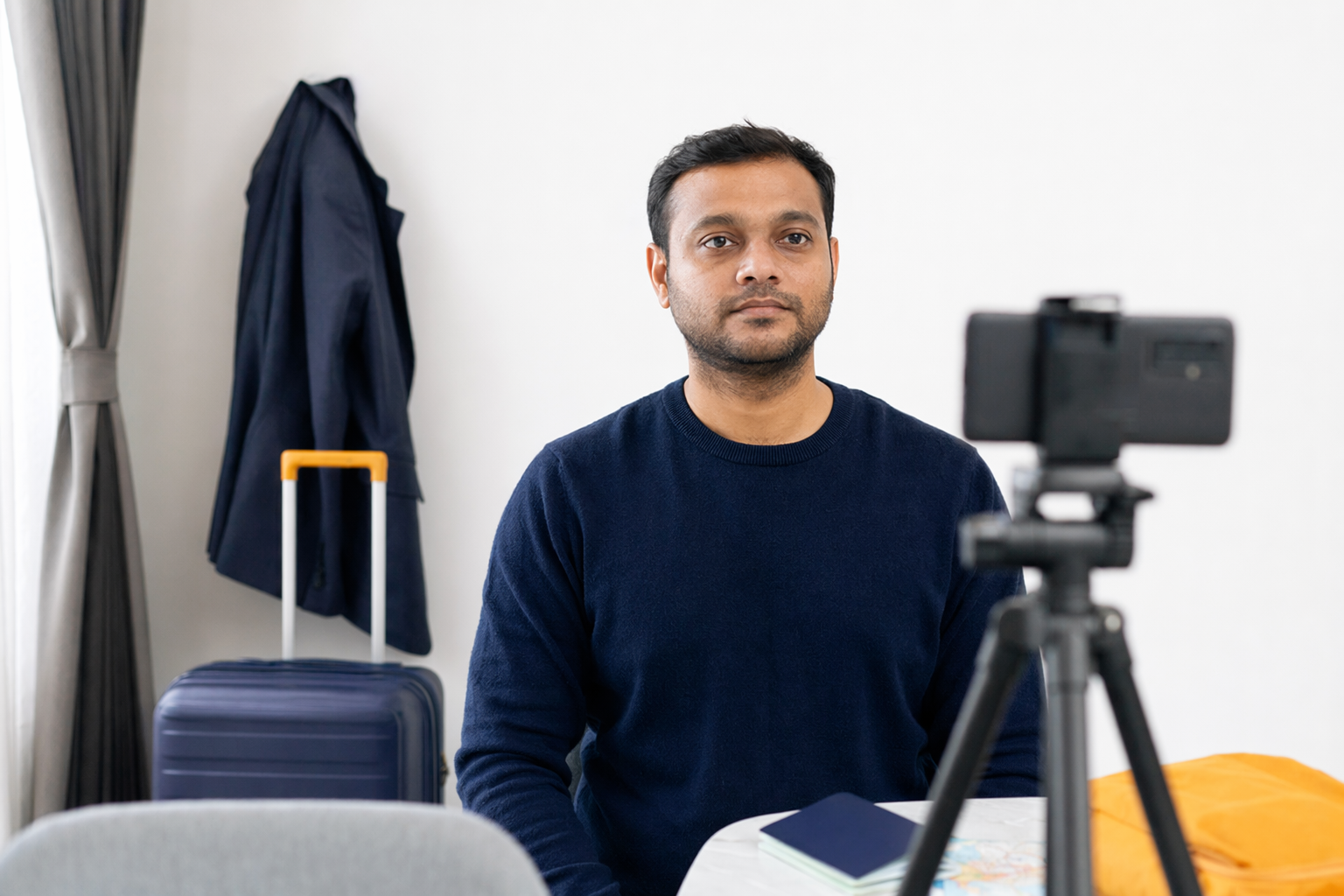
Start with a plain white or off-white background. Stand facing the camera directly. Keep a neutral expression or a natural closed-mouth smile. Both eyes should be open and visible. Use even light so there are no strong shadows on your face or behind you.
Ask another person to take the photo if possible. Selfies are risky because the angle is often wrong. The camera should be at eye level and close enough to show your head and upper shoulders clearly. Do not use heavy filters, beauty mode, or portrait effects. The photo should look like you today.
Before you print or upload anything, check these basics:
- No hats or head coverings unless worn daily for religious or medical reasons
- No headphones or wireless earbuds
- No sunglasses or tinted glasses
- Regular glasses are often discouraged because glare can cause problems
- No busy background, shadows, or dark lighting
- No editing that changes your face, skin, or features
If you plan to apply for a passport, remember that the photo is only one part of the process. Adult renewals are often done by mail with Form DS-82 if you qualify. First-time passports and many child applications use Form DS-11 in person at an acceptance facility. Children under 16 generally need both parents to be involved. You can always apply directly with the government yourself at no service charge beyond the official government fee.
Common pitfalls that cause delays
The most common problem is a photo that looks almost right, but not fully right. A slightly dark image, a faint shadow, a tilted head, or hair covering part of the face may be enough for the government to reject it. This is frustrating because the rest of your application may be ready.
Another common issue is misunderstanding speed. A perfect photo does not make the government approve or issue a passport faster by itself. Processing times depend on the route you use. Routine service usually takes about 4 to 6 weeks. Expedited service usually takes about 2 to 3 weeks with an extra official government fee. For urgent travel within about 14 days, some people may qualify for an in-person appointment. These are general estimates only. The government decides availability and final timing.
If you need help understanding legitimate faster options, Passlane can connect you, at no cost to you, with an independent private passport or visa expediting service. Those private companies may help courier and hand-carry application materials where allowed. Their service fee is separate from, and not included in, the official government fee. You can learn more or get matched.
Passlane is a free matching and referral service only. It does not review your government forms for legal sufficiency, does not handle government decisions, and cannot guarantee approval, a passport, a visa, citizenship, or any timeline. If you have legal or immigration questions, speak with a licensed immigration attorney or accredited representative.
Before you submit: a quick confidence check
Take one last look before you send your application. Ask yourself: does this photo look plain, recent, centered, and easy to recognize? If the answer is not clearly yes, retake it. A new photo usually costs less time than fixing a rejected application later.
It also helps to check the full process, not just the picture. Make sure you are using the correct form, signing where required, and sending the right supporting items. A passport card, for example, is valid for land and sea travel in certain cases, but not for international air travel. Small misunderstandings like this can create bigger delays.
If you are comparing direct filing with private expediting help, keep the roles clear. You may always apply directly with the government yourself at no service charge beyond the official government fee. If you choose a private expediter, its service fee is separate. Confirm the current official government fee on the official government website before you pay anything.
For your safety, online forms on Passlane should collect only basic contact and request details. You should not enter your Social Security number, passport number, or upload scanned identity documents on the site.
If you take your passport photo at home, keep it simple: plain light background, clear light, no shadows, no filters, and your full face looking straight at the camera. If the photo is wrong, the government may delay your application. Passlane is not a government agency. It is a free service that can help you compare legitimate expediting options, but you can always apply directly with the government yourself.